
SouthBridge Consulting Blog
SouthBridge Consulting has been serving the Texas area since 2015, providing IT Support such as technical helpdesk support, computer support, and consulting to small and medium-sized businesses.

Managing a business means tracking hundreds of different online accounts. Cybersecurity best practices expect unique, complex passwords for every single one. That is a massive ask.
Recently, data from NordPass showed that the average number of passwords a person manages actually dropped, falling from 170 down to 120. On the business side, that number shrank from 87 work-related passwords down to about 67.
0 Comments

How many passwords does anyone—you, your team, your family, your competitors—have to keep track of nowadays? According to research by password-management software NordPass, that number has actually decreased for the first time in years… their figures of 170 on average, 87 of which were business-related in 2024, shrank to 120 on average, 67 of which were work-related, earlier this year.
Granted, these figures were collected between April 4th and the 15th and included only 1509 users, so the statistical significance is questionable. Despite that, we can’t disagree with NordPass’ conclusion: more people are using password alternatives.

We all have too many accounts nowadays. Between our personal lives, work, and practically all the entertainment we consume, there are dozens to keep track of and manage… and then there are the ones that charge us for a service they offer. The stacking costs of these services are bad enough, but if you see them start to double or even triple in a given month, you may be experiencing a common problem that is simple enough to solve.
To do so, we need to clarify the difference between creating an account and logging in.
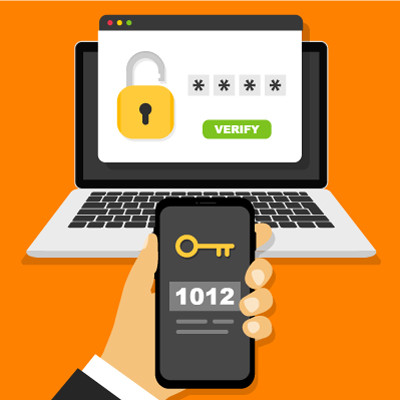
Businesses are prioritizing cybersecurity more than ever. Many insurers now require companies to meet specific cybersecurity standards before offering coverage, with one key requirement being the implementation of multi-factor authentication (MFA).
Here’s what you need to know and how we can help.
When I was a kid, there was a Tex Avery cartoon where Droopy Dog was chasing down a crook who escaped from jail. There was a particular scene where the crook (I think it was a wolf in a black-and-white striped jumpsuit) takes a bus, a plane, a ship, and a taxi to a secluded cabin, and then closes a series of increasingly complex doors with a large number of locks, in order to hide away from the pursuing cartoon basset hound.
Of course, when he turns around, exhausted by all the effort he puts in, he realizes that Droopy is standing right behind him, and greets him with a monotone “hello.”
I haven’t seen this cartoon since I was 7 years old, but I almost always think about it when I am using multi-factor authentication.
Multi-factor authentication is great when it works, but when it doesn’t, it can leave you in a pretty difficult situation. After all, what happens when all of a sudden, you cannot access your secondary authentication methods? We’re here to help you bypass this particularly challenging and frustrating scenario.
Two-factor authentication is commonplace in the office environment, but it’s not commonplace enough, if you ask us. Too many organizations pass on it, placing their security at risk for no good reason. While the methods might vary, the benefits of two-factor authentication are too good to ignore. We’ll walk you through how to set up two-factor authentication for three of the most common accounts in the business environment: Microsoft, Google, and Apple.
Onsite Locations We Serve
- Alvin IT Services
- Clear Lake IT Services
- Friendswood IT Services
- Pearland IT Services
- Manvel IT Services
- Pasadena IT Services
- Dickinson IT Services
- Kemah IT Services
- Bacliff IT Services
- Deer Park IT Services
- League City IT Services
- Fort Bend IT Services
- Cypress IT Services
- Cinco Ranch IT Services
- Humble IT Services
Contact Us
Learn more about what SouthBridge Consulting LLC can do for your business.
SouthBridge Consulting LLC
Webster, Texas