
SouthBridge Consulting Blog
SouthBridge Consulting has been serving the Texas area since 2015, providing IT Support such as technical helpdesk support, computer support, and consulting to small and medium-sized businesses.


All businesses have different goals when it comes to developing their IT infrastructure. While some might struggle just making ends meet with important maintenance, others might decide that it’s time to branch out and try innovative new solutions to take their infrastructures to the next level. We want to make one thing clear; both situations are perfectly fine, so long as you are willing to accept that you could always be doing things better, and today is the perfect time to take the next steps.
0 Comments
Managed IT services are well known for being an incredibly useful service for a business as it helps offset the cost of keeping their technology up and running. What they aren’t as well known for are all the other services that they do to add value for their customers.
Most business owners that rely on their IT have heard about managed It services. Many already subscribe to some form of outsourced IT service. It is one of the best ways to cut down your business’ operational costs while gaining value through the use of services that, if they were to be purchased intermittently, would cost a lot more. Today, we thought we’d list some of the most important variables you should consider if you are looking to choose a managed IT services provider.

With tax season quickly reaching its crescendo, accountants and CPAs face increased threats to their data security. Your clients' financial information is too good for a cybercriminal to pass up. Now is the time to prepare yourself to fight a cyberattack. Learn how managed IT can support your business in a variety of ways.

2020 was… well, 2020… so it really isn’t any surprise that those businesses that made it to 2021 aren’t quite out of the woods yet. The many difficulties and challenges that 2020 brought will carry over into this year, many of them pertaining to information technology and how businesses utilize it. Let’s take a few moments to anticipate how these IT challenges will manifest this year.

Flash Player—the familiar Adobe web application that first premiered in 1996—is finally going into retirement at the end of the year. This is quite a big deal, as Flash Player was (at least initially) instrumental to many of the platforms that so many rely on these days. However, what will this mean for your business?

Your business’ technology is extremely important to your business’ success and ensuring that it is functioning as designed has to be an ongoing priority. This can be harder than you may think. Today, we’ll go over how you can actively confront this challenge and keep your IT running as it should.

Shadow IT is no laughing matter, despite its overly theatrical name, as it describes the rogue technology and software being used in your business without being cleared or vetted. While it has always been a problem with in-house operations, the widespread adoption of remote work has made it even more dangerous.

Every business has the occasional computer problem. Like any other machine it needs constant maintenance to work as intended. When you are working in a productive environment, IT problems can really damage your business’ ability to conduct business. One solution to what seems like endless computer issues is the presence of an IT support help desk. Let’s take a look at a couple of benefits that having a help desk solution in place can have for a small business.
With more people than ever working from home, their ability to receive the support they need to keep their devices in top working order is crucial. As a result, many businesses have turned to managed IT service providers to maintain their employees’ computers. MSPs like us utilize a tool called remote monitoring and management software (RMM). Let’s discuss what it is and why it is so useful for managing your company’s IT.

Managed services have quickly become the most reasonable option for businesses of any size to use, and based on what we’ve seen recently, will soon be the only real option for most operations. However, when considering the managed service option, you need to make sure you find a provider with the following capabilities and service offerings:

If you’re trying to minimize your operating costs to improve your budget, it is important to keep in mind that sacrifice isn’t your only option. Instead, you also have the option of streamlining and minimizing some of your larger expenses by enlisting a managed services provider and the more sustainable business model we adhere to.

Remote monitoring and management software helps businesses of all sizes avoid issues of equally variable sizes, which is why it is a key facet of the managed IT service model. We wanted to review some of the ways that it benefits the managed service provider, and as a result, benefits our clients.

That’s an interesting question, as there are many things that can create some form of lag in a business’ network. Let’s go into some common causes of this slowness, starting with one clear indication that something is up.
Most businesses nowadays require a server in order to operate properly, but these critical pieces of infrastructure aren’t immune to issues. Here, we’ll go over a few common reasons that you may experience a server crash.

You’re likely aware that we have a Help Desk for our clients to leverage, but not all companies handle their support the same way. Here, we wanted to share a few reasons that we are confident that our approach to support is better for our clients.

When it boils down to it, there are really only two ways to operate a business: proactively, or reactively. While many businesses still rely on their reactivity to deal with their technology issues, the opposite approach is demonstrably more effective for the modern business. Let’s explore some of the effects that a proactive and reactive strategy can each have on your operations.

Information technology support has developed and evolved as the methods and equipment used have improved. As a result of this development, there are a variety of ways that managed IT providers can deliver additional value through their services. In this series, we’re exploring the many benefits a business can gather through managed services - here, focusing on the support available.
In order for one methodology to replace another, it has to provide more value than the one that came before. In terms of IT support, managed services can deliver far greater value than the familiar break/fix method. In this series, we’ll explore the value that managed services contribute to a business, starting with their proactive nature.
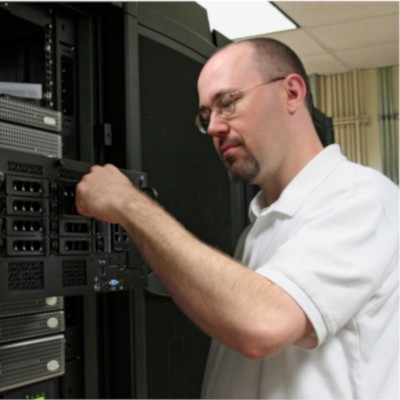
Downtime is a major problem for businesses, and it’s largely a result of technology taking over the workplace. Since many jobs rely on technology to be done properly, it stands to reason that broken-down technology can pose a considerable issue for businesses--not to mention the costs that are associated with downtime and maintenance. A help desk can alleviate some of the pressure that the average employee feels as a result of relying on technology in the workplace.
Onsite Locations We Serve
- Alvin IT Services
- Clear Lake IT Services
- Friendswood IT Services
- Pearland IT Services
- Manvel IT Services
- Pasadena IT Services
- Dickinson IT Services
- Kemah IT Services
- Bacliff IT Services
- Deer Park IT Services
- League City IT Services
- Fort Bend IT Services
- Cypress IT Services
- Cinco Ranch IT Services
- Humble IT Services
Contact Us
Learn more about what SouthBridge Consulting LLC can do for your business.
SouthBridge Consulting LLC
Webster, Texas