
SouthBridge Consulting Blog
SouthBridge Consulting has been serving the Texas area since 2015, providing IT Support such as technical helpdesk support, computer support, and consulting to small and medium-sized businesses.


Remote work is more common than ever before, but it wasn’t always this way. It’s still a relatively new method of operations, and while there are quite a few benefits for both employees and employers, there are other impacts related to remote work that can have far-reaching consequences.
0 Comments

Communication solutions are especially important in today’s world of remote and hybrid work, and we are here to tell you that the traditional telephone solution you’ve known and loved for all these years is simply not viable in today’s business environment. Thankfully, a viable replacement is widely available, and it’s all thanks to Voice over IP technology.

Most everyone uses the cloud in some capacity, even if it’s not a professional one. Simply put, the value it provides even on a consumer level is astounding, and this is even more so with business applications. The cloud makes it much easier for organizations to manage their resources compared to hosting them in-house, but a problem has surfaced with some companies suffering due to what’s called “cloud sprawl.”

When it comes to procuring technology and working on technology projects, budgeting is a key issue that must be ironed out long before project implementation begins. This process can be troublesome and fraught with all sorts of challenges, but you don’t have to do it alone! We’ve got your back. Here’s a crash course on how you can manage your IT budget for maximum value.

There is so much technology to choose from for your business that it can be overwhelming to pick the right tools for your specific circumstances. There are communication tools, productivity solutions, and even mobile options that can enhance and enrich your clients’ and employees’ experiences with your company. As a business owner, you must do all that you can to keep the future in mind when implementing innovative new technology solutions to fit the needs of your organization.

Have your opinions of remote work changed at all over the past year and a half, or do you still want your employees to return to the office in full force? Many major companies, despite initially advocating for remote work, are sending mixed signals on the topic, including Microsoft. What can we learn from the experiences of these companies?

What do you do with your old email messages? Do they just sit around in your inbox and collect dust? If so, this is certainly a wasteful practice, as those emails can accrue over time and take up a sizable chunk of space. The question then becomes, what do you do with the emails to keep them from taking up so much space, especially when you might be paying for the space?
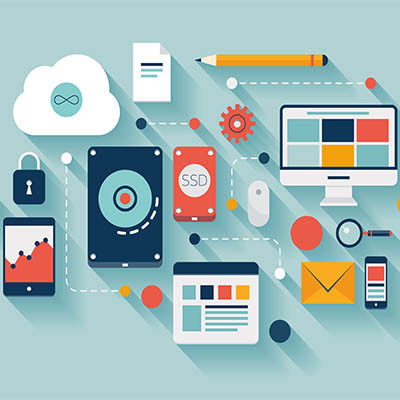
In today’s competitive business environment, you need every edge you can get to one-up your competition and make waves in your chosen industry. One of the best ways you can do so is by strategically implementing technology solutions that can enhance or transform the way your business operates both internally and externally.

Most of us take streaming media for granted. Whether you are streaming a movie on Netflix, binge-watching a show on Hulu, or using one of the growing number of streaming television networks to stream sports, shows, and news, there is quite a bit of interesting technology fueling your entertainment. Today, we thought we’d briefly go through some of the tech that makes these streaming services, and their millions of simultaneous streaming feeds, possible.

Many professionals see the word “informatics” and think of one of two things. First, what the heck is it? Second, isn’t that just computer science? While the two certainly are similar and often used interchangeably, they are quite different. Let’s take a deeper dive and see what the field of informatics entails, how it can be applied to computer science and business, and why it’s important to consider for your organization.

With the future so uncertain, it’s no surprise that many organizations are turning their focus toward business continuity. There are a lot of components that go into making a successful continuity plan, and if you want to optimize your chances of survival in the face of a disaster, you need to ensure that all your bases are covered.
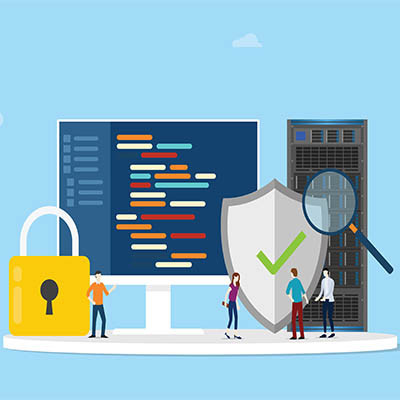
Data breaches have a tendency to destabilize relationships. With so many data-related problems befalling businesses nowadays, it is important that each side of every data-driven relationship understands their role in the protection of other organizations’ data. Today, we’ll take a look at the issue and how to determine if your partners are putting in the effort required to keep your data secure.

The COVID-19 pandemic brought with it no small amount of uncertainty, including amongst business owners who were looking at a very up-in-the-air future. With so many lacking the technology needed to support remote operations—never mind the fact that remote work was a new concept for so many—the learning curve was a considerable hurdle. However, with vaccines being administered and restrictions lifted, it now becomes critical to find a balance.

All businesses, in some way, shape, or form, exist to generate revenue—whether their profits are retained for their own benefit or dedicated to supporting some other cause. Either way, this balance makes the difference between the investments a business makes and the return these investments see a critical consideration. By using modern technology, today’s organizations can tip this balance to be more in their favor.

With tax season quickly reaching its crescendo, accountants and CPAs face increased threats to their data security. Your clients' financial information is too good for a cybercriminal to pass up. Now is the time to prepare yourself to fight a cyberattack. Learn how managed IT can support your business in a variety of ways.

When looking to improve your business via the use of technology, it helps to keep a few basic tenets in mind. Let’s review some strategies to help reinforce their importance.

Today is Christmas day. In normal years, you would be bundling up to go to visit family and friends or preparing to host them.

A lot has been made about the newly-remote workforce that has been doing their best during the COVID-19 pandemic. One issue that many ignore is burnout. Sure, it happens in the office too, but there is something unsettling about getting up and going to work walking distance from your bed. Today, we will take a look at at-home worker burnout and give you a few tips to help you keep from suffering the same fate.

How often do you find a message in your SMS inbox that has clearly come from a business, but you almost have to wonder, simply because the incoming number seems to be randomized? Google has taken notice of this challenge, and so has rolled out a means for businesses to confirm that they are in fact the ones sending a particular message.

Today is the first day of the third decade of the 21st century. For some, it’s just another year, but for others it seems almost impossible that we’ve reached this point without floating cars and manned missions to Jupiter. Fifty years ago, some of the technology that is used in the course of doing business was simply fiction or conjecture. We thought it would be neat to take a look at some of the technological changes made since 1970.
Onsite Locations We Serve
- Alvin IT Services
- Clear Lake IT Services
- Friendswood IT Services
- Pearland IT Services
- Manvel IT Services
- Pasadena IT Services
- Dickinson IT Services
- Kemah IT Services
- Bacliff IT Services
- Deer Park IT Services
- League City IT Services
- Fort Bend IT Services
- Cypress IT Services
- Cinco Ranch IT Services
- Humble IT Services
Contact Us
Learn more about what SouthBridge Consulting LLC can do for your business.
SouthBridge Consulting LLC
Webster, Texas